- Case study
- E-learning
- LiveKit
- Next.js
Leaving LearnWorlds: why CCL built its own e-learning platform
CCL paid LearnWorlds $254.15 a month and still ran live classes on Zoom. Why it moved to its own system for live programmes, video capsules and running the company, and when a LearnWorlds alternative makes sense for you.

· 5 min read
Key takeaways
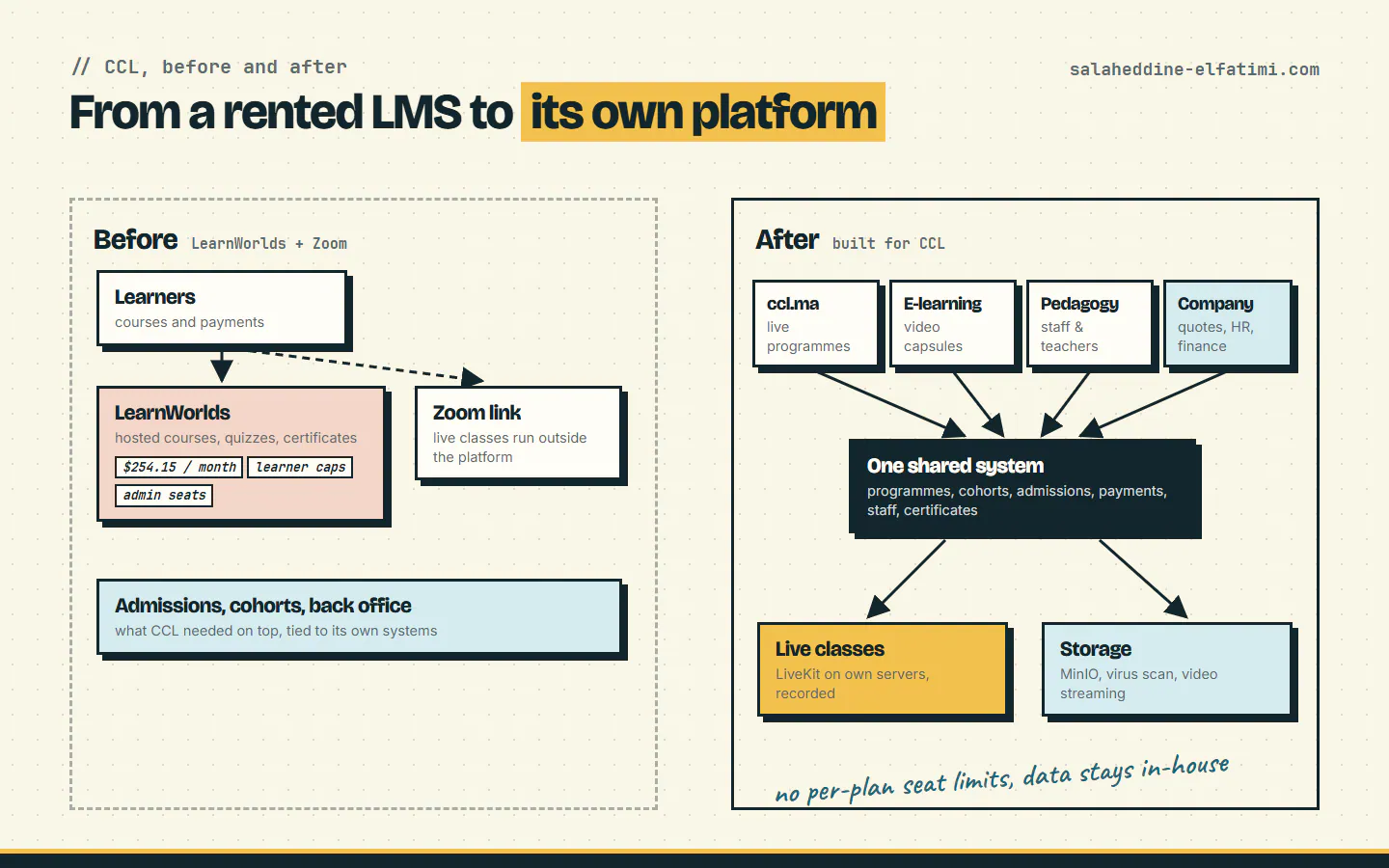
- 1CCL paid LearnWorlds $254.15 a month, about $3,050 a year, and still ran live classes through Zoom.
- 2LearnWorlds plans cap monthly active learners and admin seats, and run live sessions through Zoom, Meet, Teams or Webex integrations.
- 3CCL now runs live programmes on ccl.ma, video capsules on elearning.ccl.ma, a pedagogy back office and a company dashboard for quotes, HR and finances, all on one shared system.
- 4A custom platform fits academies built around live teaching and cohorts; LearnWorlds remains a good fit for self-paced courses and small teams.
The right LearnWorlds alternative depends on what you've outgrown. For CCL, a training academy in Morocco, it was live classes that ran through Zoom, plan limits on learners and admins, and an admissions process the platform wasn't built for. CCL paid LearnWorlds $254.15 a month. I replaced it with a system built around how CCL actually works: live programmes on one site, video capsules on another, and one dashboard that runs the whole company, with live classes and storage on its own servers.
What CCL got from LearnWorlds#
To be fair to it: LearnWorlds is a good product for launching courses fast. You get a course builder, quizzes, certificates, payments and a branded school without writing code. For a new academy, that's a sensible place to start.
CCL's bill was $254.15 a month, about $3,050 a year. For reference, the LearnWorlds pricing page lists Starter at $29, Pro Trainer at $99 and Learning Center at $299 a month at the time of writing, with discounts for paying yearly. Every plan caps two things: monthly active learners (1,000 on Starter, 2,000 on the next two) and admin seats (1, 5 and 25). Full white-label, single sign-on and the API sit on the higher tiers.
Why CCL needed a LearnWorlds alternative#
1. Live classes ran through Zoom#
On LearnWorlds, live sessions and webinars run through integrations with Zoom, Google Meet, Microsoft Teams or Webex, as its pricing page lists. For an academy whose programmes are built around live teaching, that means a second tool, a second login, and recordings that live somewhere else. CCL wanted live classes inside its own platform, recorded on its own servers.
2. Plan limits on learners and admins#
Caps on monthly active learners and admin seats are how SaaS pricing works. They also mean the bill follows your growth: more students, more staff or more teachers in the back office push you toward a bigger plan. CCL has staff, teachers and programme managers who all need their own access.
3. Admissions, cohorts and a real back office#
CCL doesn't only sell courses. It runs certifying programmes with dated sessions, a fixed number of seats, admissions, admissibility letters and certificates that employers check. On top of that, the company itself has to run: quotes, HR and employees, and the money coming in and going out. A course platform covers the courses. CCL needed one system for the programmes, the staff who teach them and the business behind them.
4. Owning the data, and the monthly fee#
Students, videos, recordings and documents lived on someone else's platform, and the fee came back every month. CCL wanted its data on its own servers and a platform it owns.
What I built instead#
Each part of CCL now has its own place, and they all share one system and one set of data:
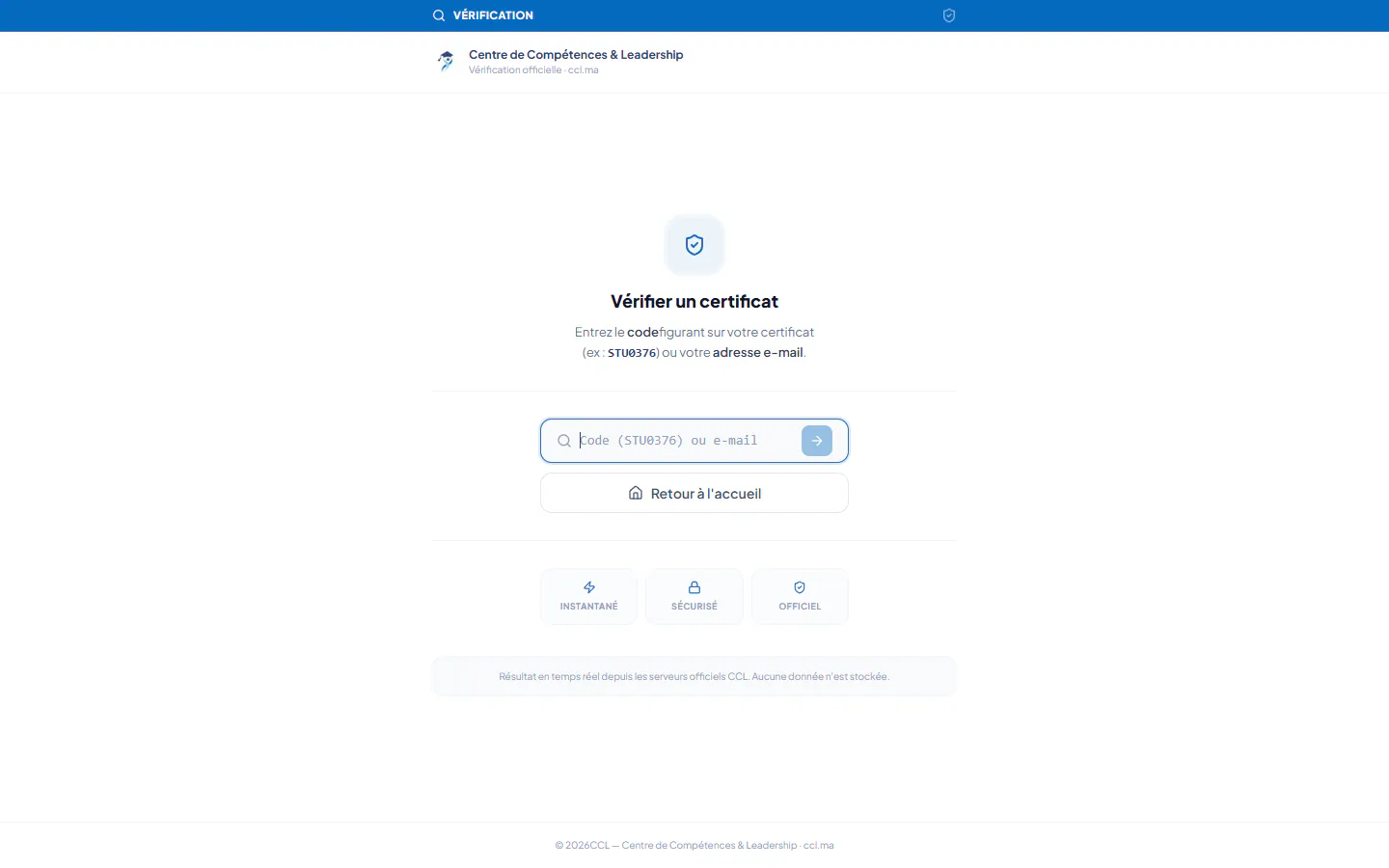
- ccl.ma, the live programmes (Next.js and TypeScript): the catalogue of certifying live programmes, with cohorts and the seats left in each session, prices in dirhams, online enrolment and payment, a student dashboard (programmes, payments, documents, certificates), the live classes themselves with their recordings, and an orientation test that suggests a programme.
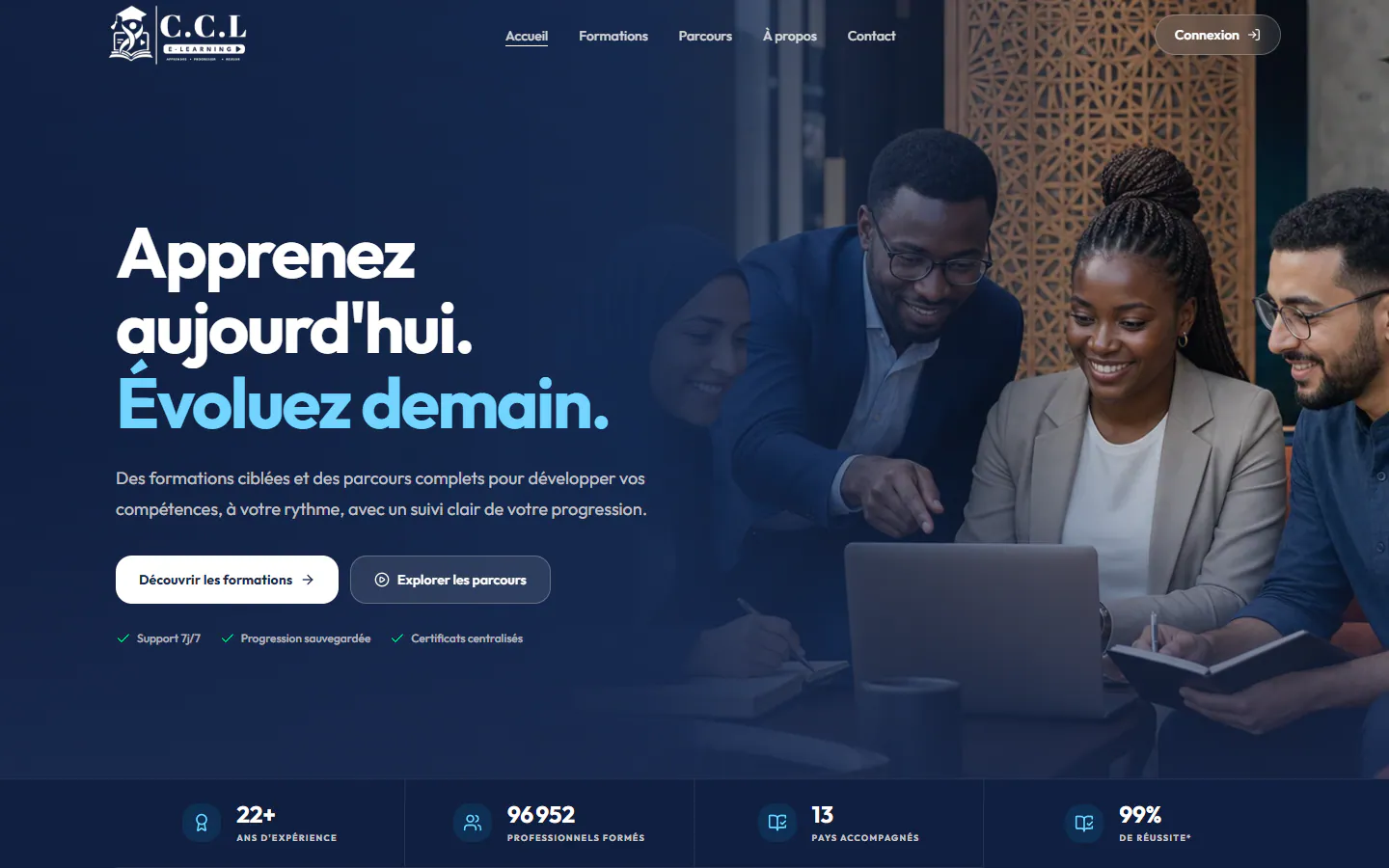
- elearning.ccl.ma, the video capsules: short recorded video courses and learning paths people follow at their own pace, with quizzes, progress tracking, watermarked lesson PDFs, a free capsule to start with, checkout and certificates.
- The pedagogy back office: separate areas for admins, staff, teachers and programme managers to run programmes, cohorts, sessions, learning paths, course materials, teachers and enrolments, including control of live sessions (mute or remove participants, start and download recordings, chat).
- The company dashboard: CCL's own dashboard for running the business itself: quotes, HR and employees, and the money side. The academy and the company run in the same system instead of a course platform plus a pile of separate tools.
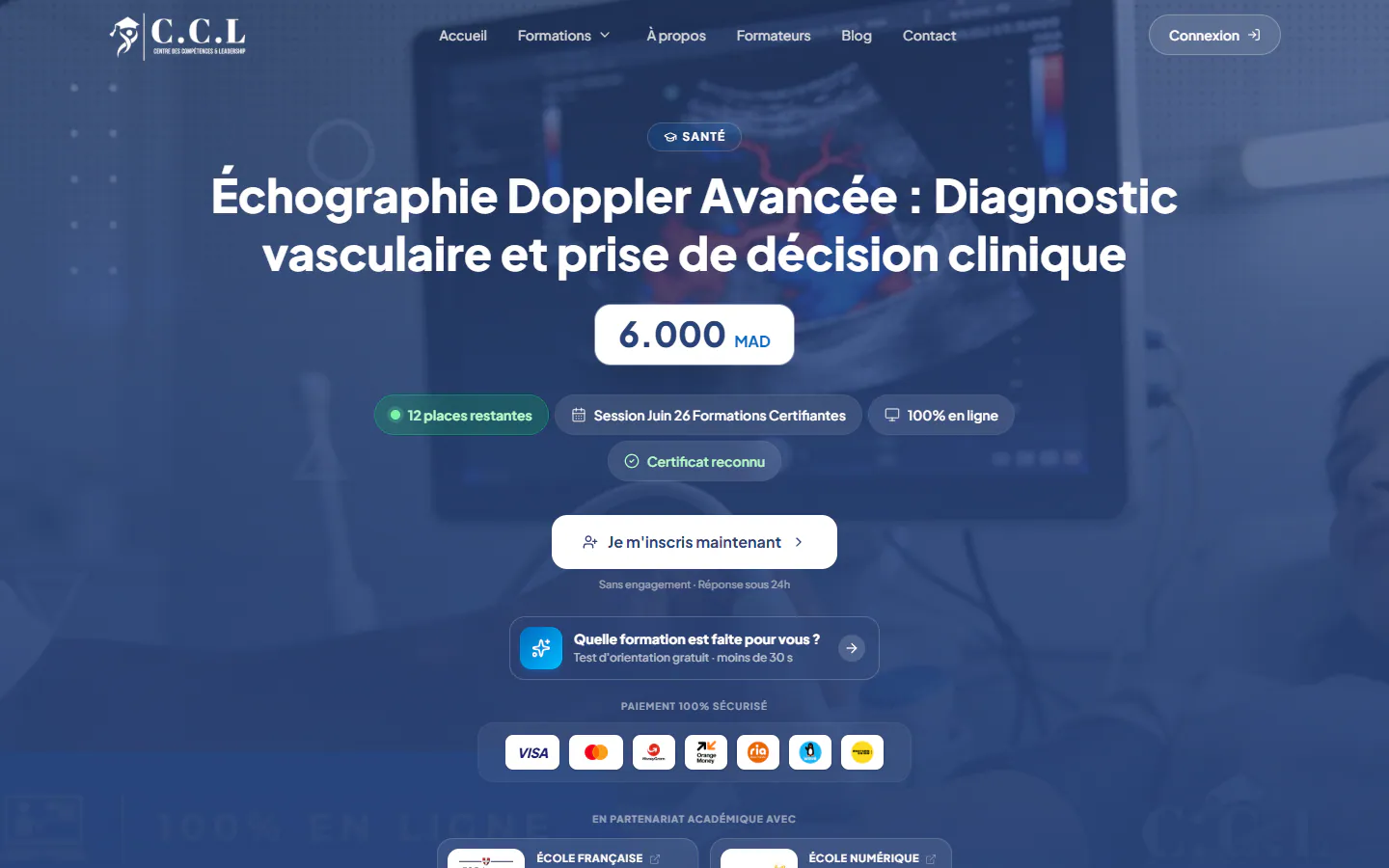
Certificates can be checked by anyone on the certificate verification page, with the code printed on the certificate. That matters when an employer wants proof, and it's the kind of feature that's easy to build when the data is yours.
Live classes without Zoom#
Live video runs on LiveKit on CCL's own server: the video server, four recording workers, TURN for strict networks, and a storage service with virus scanning and adaptive video streaming. The same infrastructure also serves Schoolaris and Polypro Academy. In a load test on that server, 24 classes recorded at the same time with every file intact. I wrote up the whole setup, including what broke, in how to self-host LiveKit for live classes.
Should you build your own platform or stay on LearnWorlds?#
A custom platform isn't automatically the best LearnWorlds alternative. It trades a monthly fee for ownership and the work that comes with it. A simple way to decide:
| Your situation | Better fit |
|---|---|
| Launching your first courses, small team, mostly self-paced content | Stay on LearnWorlds |
| Live classes are a small part of what you sell | Stay on LearnWorlds |
| Live teaching is the core of your programmes, and you want recordings in-house | Custom platform |
| You run cohorts, admissions and certifying programmes, not just courses | Custom platform |
| Many staff and teachers need their own access | Custom platform |
| Your data has to stay on servers you control | Custom platform |
| You want courses, quotes, HR and finances in one system | Custom platform |
What a custom platform really costs#
Leaving a SaaS platform doesn't make the costs disappear; it changes them. With your own platform you take on:
- Building it: the catalogue, enrolment, payments, dashboards and back office all have to be designed and developed.
- Servers: live video and recordings need real hardware, and storage grows with every recorded class.
- Running it: updates, backups, security and someone to call when a live class has a problem.
In exchange, the platform works the way your academy works, grows without a per-seat price list, and everything on it belongs to you. For CCL, with live programmes, cohorts and a team of staff and teachers, that trade made sense.
Thinking about leaving LearnWorlds?#
If you run an academy or training centre, you're weighing a LearnWorlds alternative, and your platform has started shaping your programmes instead of the other way round, tell me how you work today. You can also see the platforms I've built, including Schoolaris, which runs on the same live-class infrastructure.
Frequently asked questions
What is a good LearnWorlds alternative for live classes?+
If live teaching is at the core of your programmes, a platform with its own live video (for example built on LiveKit) keeps classes and recordings inside your platform instead of on Zoom links. CCL moved to a custom platform for this reason.
How much does LearnWorlds cost?+
At the time of writing, LearnWorlds lists Starter at $29, Pro Trainer at $99 and Learning Center at $299 a month, with discounts for yearly billing and custom plans above that. CCL's bill was $254.15 a month.
How do live classes work on LearnWorlds?+
LearnWorlds lists live sessions and webinars through integrations with Zoom, Google Meet, Microsoft Teams and Webex.
Should I build my own e-learning platform?+
Build your own when live teaching, cohorts, admissions or data ownership are central to how you work and you can support servers and maintenance. For self-paced courses and a small team, an all-in-one platform like LearnWorlds is usually simpler.
Written by
Full Stack Developer & Web Marketer · Marrakech, Morocco
I build modern, scalable web applications end to end, from frontend to backend, with a focus on performance, clean code and user experience.